
Dear Valued Customer,
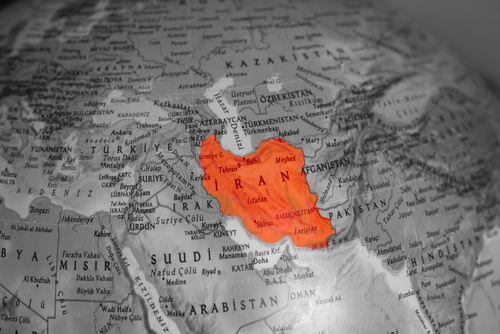
Following our previous Customer Advisories, including our update of 16 March 2026, we are issuing this communication to provide a further current status update on the evolving geopolitical situation in the Middle East and its continued global impact on air and ocean supply chains. What began as a regional disruption has clearly developed into a global supply-chain event, impacting capacity, congestion, transit times, service reliability, and logistics costs well beyond the Middle East. The situation remains highly dynamic and continues to evolve on a daily basis.
Employee Safety and Operational Status
Employee safety remains our highest priority. At present, all Pentagon employees in the affected areas remain safe. As a precautionary measure and in line with local authority guidance, pentagon continues to operate with work-from-home arrangements in Qatar, and the UAE. Pentagon remains fully operational across the region.
The ongoing geopolitical situation in the Middle East has resulted in temporary closures of some ports and airports in the region for safety reasons, with operations restarting after all clear communicated from relevant authorities. With airspace across the UAE and neighbouring Gulf countries only partially open, air shipments continue to be received from key origins, though at significantly reduced volumes compared to pre-crisis levels.
Air Freight – Current Impact and Global Implications
Air freight capacity across the region remains extremely constrained. Gulf carriers have gradually resumed limited freighter operations, primarily for repositioning, essential cargo, and backlog clearance, subject to regulatory approval. At the same time, several international carriers continue to suspend services to certain destinations, while national carriers operate on a reduced and highly selective basis.
As a result:
- Overall air freight capacity remains very limited
- Flight schedules and routings are subject to short-notice changes
- Delays, rollovers, and space constraints should be expected
The impact is now spreading well beyond the Middle East. Cargo flows from Southeast Asia, the Indian subcontinent, and Oceania are increasingly being rerouted via China and Hong Kong, placing additional pressure on trade lanes that were previously less affected. This has led to:
- Further tightening of capacity across the global air freight network
- Increased congestion at alternative hubs
- Continued upward pressure on rates
Global Air Freight Implications
- Reduced global capacity: Aircraft redeployments, route extensions, and service suspensions are tightening availability across key trade lanes.
- Far East–Europe & Asia–Middle East corridors: These lanes are seeing particularly strong capacity constraints.
- Rate volatility: Ongoing upward pressure on air freight rates is expected due to sustained capacity limitations.
- War risk and fuel surcharges: Airlines continue to introduce or review war risk surcharges and fuel surcharge adjustments as geopolitical risks and fuel prices remain elevated.
Customers should anticipate potential delays or cancellations, limited space availability, and short-notice rate adjustments in the coming days and weeks.
Middle East Airport Updates
| Airport gateway | Status |
| Dubai (DXB &DWC) | Increased services from Emirates and Fly Dubai but still not at full capacity and with increased rates. Very limited other carrier options. |
| Abu Dhabi (AUH) | Etihad has resumed limited services with increased rates and reduced capacity, very limited other carrier options. |
| Sharjah (SHJ) | Limited services resumed with reduced capacity and increased rates. |
| Doha (DOH) | Very limited services resumed by Qatar Air. |
| Oman (MCT) | Open but current carriers limited to Oman Airways and Turkish Airlines – with high demand for space. |
| Saudi Arabia (DMM / RUH / JED) | Open with limited carrier options. |
| Kuwait International (KWI) | No operations. |
| Bahrain (BAH) | No operations. |
| Iraq (BGW EBL BSR) | No operations. |
Ocean Freight – Current Impact and Maritime Developments
Ocean freight continues to face more severe and structural challenges. Following recent decisions by marine insurers regarding war risk coverage, many shipping lines have stopped accepting new bookings to and from the Middle East. Expanded exclusion zones across parts of the Gulf of Oman and surrounding waters have further limited carrier operations.
As a result:
- Several shipping lines have suspended services to the Arabian Gulf
- This suspension also applies to empty containers already released for stuffing and intended for export
- Vessels currently enroute are being diverted to the next safe port of discharge
Ports in Oman, including Salalah and Sohar, were temporarily impacted following confirmed incidents. Salalah and Sohar have since reopened, though operations remain constrained. The UAE ports of Khor Fakkan and Fujairah remain operational, but congestion and slower handling times persist due to capacity limitations. There are limited feeder operations available from Sharjah and Jebel Ali to Upper Gulf Ports of King Hamad (Qatar), Bahrain, Dammam (Saudi Arabia) and Umm Qassr (Iraq), however space is very limited and subject to additional war risk and other surcharges.
Alternative routing via Saudi Arabian ports, including Jeddah and King Abdullah Port, remains feasible. However, many importers are currently delaying new orders amid uncertainty and in anticipation of potential de-escalation.
What This Means for Your Ocean Shipments:
- All ocean shipments to the Middle East and Gulf region require explicit, updated carrier booking confirmations, which remain limited and subject to change.
- Shipments already at sea may be diverted to alternative ports, where cargo will be discharged and made available for onward instructions.
- Available options may include delivery at the contingency port, onward transport by road or rail (subject to feasibility), or change of destination, all on a case-by-case basis.
- To mitigate exposure to storage, demurrage, or detention charges, Pentagon can—where appropriate and in coordination with you—collect and temporarily store cargo until departures resume.
- In certain cases, carriers may issue End of Voyage Declarations.
Alternative Air & Multimodal Routing – Ready to Operate for UAE & Qatar:
In line with our mitigation strategy, Pentagon in conjunction with JAS is ready to operate bonded air-to-road solutions into Dubai and Qatar, providing customers with a practical alternative while direct air capacity remains constrained. These solutions are fully prepared for deployment and can operate on a scheduled basis, up to three times per week, subject to shipment confirmation and operational feasibility.
Air Freight Gateways with Bonded Trucking into Dubai & Qatar:
- Dammam (Saudi Arabia): Air cargo via Dammam International Airport, with bonded trucking into Dubai or Qatar.
- Riyadh (Saudi Arabia): Air cargo via Riyadh, with bonded trucking into Dubai or Qatar.
These options are designed to support shipment continuity into Dubai and Qatar under current conditions. Transit times, availability, and costs will be assessed case by case.
Cross Border Trucking within Middle East:
To date all land borders within the GCC and Iraq are operational, however with some delays for increased security, we anticipate that there will be some congestion at key border points if this situation extends further. Truck availability is becoming an issue, and we are seeing an increase in rates for local and cross border movements.
Inland Transportation – Global Impact of situation
In addition to carrier surcharges, the sustained increase in oil prices is also impacting inland transportation costs globally. Higher fuel prices are affecting trucking, rail, and feeder movements to and from airports and seaports worldwide, leading to increased first- and last-mile costs, drayage charges, and inland haulage rates across multiple regions. These cost pressures are being observed well beyond the Middle East and are contributing to overall logistics cost escalation on a global basis.
Mitigation Measures and Customer Guidance:
Pentagon remains fully mobilized globally to:
- Monitor carrier, port, airspace, and regulatory developments in real time
- Deploy alternative routings and multimodal solutions where feasible
- Secure and prioritize available capacity for critical cargo
- Support customer contingency planning with clear, timely communication
Recommended Customer Actions:
To support continuity and planning during this period, we recommend that customers:
- Share updated shipment forecasts where possible
- Confirm bookings as early as feasible to secure limited capacity
- Review insurance coverage and any applicable regional restrictions
- Consider flexible routing and transit-time alternatives
- Factor potential port congestion into safety-stock planning
We strongly recommend remaining in close and regular contact with your Pentagon account representative for shipment-specific guidance.
As the situation continues to evolve rapidly, we remain in close coordination with our partners and local authorities. Our teams are actively adapting to changing conditions to minimize disruption and keep supply chains moving. This situation remains fluid. Pentagon will continue to monitor developments closely and will issue further updates should meaningful changes occur.
Your supply chain continuity—and the safety of our people—remain our top priorities. Your supply-chain continuity remains our top priority.
Yours Sincerely,
Pentagon Middle East & India Management Team.