
Dear Valued Customer,
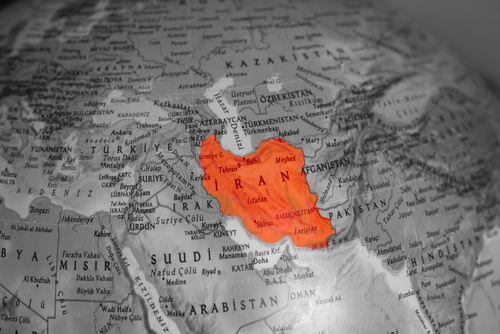
Following our previous Customer Advisories, we are providing an updated consolidated view on the ongoing geopolitical situation in the Middle East and its continued, critical impact on global air and ocean supply chains.
Recent geopolitical developments, including a ceasefire framework and ongoing diplomatic engagement, have introduced early signs of potential stabilization. However, the operational environment remains highly volatile, constrained, and far from normalized. Direct discussions held this week with multiple top global ocean carriers confirm that the situation on the ground remains extremely fragile, and the coming days will be critical in determining the direction of recovery.
What initially evolved into a regional disruption has become a global supply chain crisis, and the industry is now entering a complex recovery phase, characterized by backlog clearance, network imbalances, and continued uncertainty.
In parallel, active negotiations are currently underway between Iran and the United States aimed at de-escalation. While these diplomatic efforts are being closely monitored, it is important to note that:
- The maritime security restrictions and blockages currently in place remain officially in effect
- There has been no formal or binding easing of navigational risk status communicated to carriers or insurers
- There are potential spillover risks, including threats of disruption or attacks impacting additional ports and maritime infrastructure across the broader Gulf region
As a result, carriers and logistics operators remain in a heightened risk posture, maintaining conservative operational and routing decisions until sustained and verifiable stability is established.
Employee Safety and Operational Status:
Employee safety remains our highest priority. All Pentagon employees in the affected areas remain safe. Return to work protocols have been implemented at all sites in the Middle East whilst closely monitoring local authority guidance and adhering to all safety protocols.
Global Energy Impact and Carrier Surcharges (Air & Ocean):
Global energy markets remain under pressure despite early de-escalation signals. Oil price volatility continues, driven by uncertainty around critical maritime corridors, particularly the Strait of Hormuz.
All major carriers continue to maintain and expand cost recovery measures globally, including:
- Emergency Fuel Surcharges and Emergency Bunker Adjustment Factors (EBAF)
- War Risk, Security, Congestion, and Market Disruption surcharges
- Peak-type surcharges and general rate increases
These measures continue to reflect:
- Reduced effective capacity due to rerouting and extended transit times
- Elevated insurance and war risk premiums
- Persistent congestion and equipment imbalances
- Increased operational complexity and security requirements
In addition, inland transportation and handling-related surcharges are increasingly being adjusted across regions, reflecting higher fuel costs and operational disruption at origin and destination. It is important to highlight that carriers are expected to adjust these surcharges down only gradually, as underlying cost pressures and network disruptions will take time to normalize.
Air Freight – Current Impact and Global Implications:
Air freight conditions remain constrained, with only partial and gradual capacity recovery.
Current conditions include:
- Reduced but slowly improving capacity to/from the Middle East
- Continued schedule volatility and last-minute changes
- Payload restrictions due to longer routings and fuel considerations
- Ongoing risk of delays and backlog recovery
While some Gulf hub capacity is being reinstated, significant volumes continue to be rerouted via alternative hubs, sustaining:
- Pressure on global air freight capacity
- Congestion at key alternative gateways
- Elevated rate levels
Middle East Airport Updates
| Airport gateway | Status |
| Dubai (DXB &DWC) | Continued increase in services from Emirates and Fly Dubai but still not at full capacity offering only AXA rates. Some other carriers commenced services via Dubai including Turkish Airways, Oman Air, Saudi Air, Silkway, Air India, Egypt Air. |
| Abu Dhabi (AUH) | Continued increase of flights from Etihad also offering only AXA rates with very limited capacity, currently no other carrier options. |
| Sharjah (SHJ) | Limited services resumed with reduced capacity and increased rates. |
| Doha (DOH) | Qatar Air services increased but currently no other carriers available. AXA rates limited capacity. |
| Oman (MCT) | Open but current carriers limited to Oman Airways< Qatar Airways and Turkish Airlines – with high demand for space. |
| Saudi Arabia (DMM / RUH / JED) | Open with limited carrier options. |
| Kuwait International (KWI) | No operations. |
| Bahrain (BAH) | Air space open but with very limited services. |
| Iraq (BGW EBL BSR) | Airspace open but with limited flights to date. |
Ocean Freight – Current Impact and Maritime Developments:
Ocean freight remains significantly disrupted, with recovery expected to be gradual and operationally complex.
Recent direct carrier feedback highlights:
- Strait of Hormuz transits remain reduced by more than 90%, with most carriers not yet resuming passage
- Carriers are maintaining a strict safety-first approach, prioritizing crew and cargo security before resuming normal routing
- Decisions on broader network normalization are expected in the coming days but remain uncertain
A critical factor impacting recovery:
- Approximately 1,000 merchant vessels remain delayed or “out of position” in the Persian Gulf
- The sequencing and repositioning of these vessels alone will take several weeks, even under stable conditions
Operationally, carriers continue to:
- Avoid high-risk areas and maintain alternative routings
- Utilize Cape of Good Hope diversions, regional hubs, and feeder networks
- Apply strict booking controls depending on trade lane and risk exposure
As a result, the market continues to experience:
- Extended transit times
- Reduced effective vessel and equipment availability
- Ongoing congestion across key hubs
Strait of Hormuz – Ongoing Risk and Managed Transit
Transit through the Strait of Hormuz remains highly restricted and conditional. While authorities have indicated that passage may be possible under certain conditions, carriers confirm that:
- Most are not resuming transit until security conditions are fully assured
- Policies vary by carrier and are subject to rapid change
This remains one of the most critical risk points for global trade and energy flows.
Cost Environment – Structural Pressure and Delayed Normalization
Cost levels across the supply chain remain elevated and are expected to remain so in the near term.
Carriers report continued increases driven by:
- Bunker and fuel costs
- War risk and insurance premiums
- Rerouting and network adjustments
- Inland transportation and handling costs
What This Means for Your Shipments
- Shipments may still face delays, diversions, or revised routing
- Backlog clearance and vessel repositioning will impact schedules in the coming weeks
- Storage and flexible routing solutions remain key mitigation tools
- Additional surcharges, including inland-related adjustments, may apply depending on routing and location
Ocean Freight – War Risk and Emergency BAF
- Carriers continue to apply War Risk Surcharges and Emergency BAFs
- Carriers maintain expanded surcharge structures globally
These reflect fuel, insurance, rerouting, and operational cost increases across the full logistics chain.
Middle East Port Updates
| Ocean gateway | Status |
| Jebel Ali | Operational. Accessible via Khorfakkan & Fujairah with bonded truck movement, some feeder services to upper gulf |
| Khorfakkan | Operational. Key bypass hub, bonded corridors to Jebel Ali, Abu Dhabi and Sharjah |
| Fujairah | Operational. Key By Pass Hub, bonded corridors to Jebel Ali and Abu Dhabi |
| Khalifa Port (AUH) | Operational. Served through bonded trucking and rail connectivity feeder services to upper gulf. |
| Sharjah | Operational. Key port for feeder services to upper gulf. |
| Ajman | Operational |
| Ras Al Khaimah | Operational |
| Dammam (KSA) | Operational. Only feeder calls at present, also serving as container depot for Qatar imports and exports via JED port |
| Jeddah (KSA) | Operational. Key Gateway port for mainline carriers with bonded trucking services to and from Kuwait, Qatar, UAE. |
| King Abdullah Port (KSA) | Operational. Key Gateway port for mainline carriers with bonded trucking services to and from Kuwait, Qatar, UAE. |
| Neom (KSA) | Operational |
| Sohar (Oman) | Operational. Key Gateway port for mainline carriers with bonded trucking services to and from Kuwait, Qatar, UAE. No DG accepted |
| Salalah (Oman) | Operational. Key Gateway port for mainline carriers with bonded trucking services to and from Qatar & UAE. DG accepted with prior approval only. |
| Duqm (Oman) | Operational – but not accepting DG |
| Hamad Port (Qatar) | Operational. Only feeder calls at present |
| Bahrain | Operational. Only feeder calls at present |
| Umm Qassr (Iraq) | Operational. Only feeder calls at present |
Inland Transportation
Inland transportation continues to be impacted globally by:
- Elevated fuel costs
- Network disruption and congestion
- Equipment and driver imbalances
Customers should expect continued adjustments in trucking, rail, and feeder-related charges. Within the Middle East in addition to rising fuel costs there is dramatic increased demand for trucks given the increase in cross border trucking involved in multi modal ocean transits, intra GCC border crossings are also congested causing delays.
Pentagon Mitigation Measures and Customer Guidance:
Pentagon remains fully mobilized globally to:
- Monitor developments in real time through direct carrier engagement
- Deploy alternative and multimodal routing solutions
- Support backlog management and recovery planning
- Secure capacity for critical shipments
Recommended customer actions:
- Share updated forecasts regularly
- Confirm bookings as early as possible
- Review insurance coverage, including war risk
- Consider flexible routing and transit options
- Plan for continued volatility in transit times and costs
We strongly recommend remaining in close contact with your Pentagon account representative to assess shipment-specific risks, routing alternatives, and cost implications. While early signs of stabilization are emerging, the situation remains highly dynamic, and recovery will take time, particularly as networks are rebalanced and backlog is cleared.
Pentagon will continue to monitor developments closely and provide further updates. Your supply chain continuity—and the safety of our people—remain our top priorities.
Your supply chain continuity—and the safety of our people—remain our top priorities.
Yours Sincerely,
Pentagon Middle East & India Management Team.