
Dear Valued Customer,
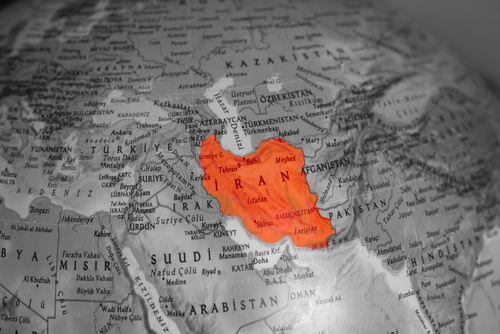
We are issuing this Customer Advisory to provide an updated and consolidated view of the rapidly evolving geopolitical situation in the Middle East and its immediate and near-term ripple effects on global supply chains across all major trade lanes.
What began as a regional disruption has now expanded into a global supply-chain event, impacting capacity, congestion, transit times, service reliability, and logistics costs well beyond the Middle East. The situation remains highly dynamic and continues to intensify worldwide.
Locally in Middle East our focus is on the safety and security of our teams, contractors and partners. In line with local guidelines, we continue to operate services as required at our warehouse and yard facilities in United Arab Emirates and Qatar, and we are fully operational at our facilities in Oman.
Global Energy Impact and Carrier Surcharges:
A sharp short-term increase in oil and gas prices is expected, and initial market observations confirm this trend. As a result, airlines and shipping lines have begun announcing, or are expected to announce shortly:
- Emergency Fuel and Emergency Bunker Surcharges
- War Risk, Congestion, and Peak-Season-type surcharges
- General rate increases across air and ocean networks
These surcharges are not expected to be limited to routes to/from/via the Gulf region and will likely affect carriers’ entire route networks, impacting shipments globally.
Shipping Lane Closures – Global Maritime Impact:
The Strait of Hormuz, one of the world’s most critical maritime corridors for energy and commercial cargo, has been declared closed to vessel traffic following escalating military activity in the region. In parallel, heightened security risks have materially impacted the Red Sea, Bab el-Mandeb Strait, and Suez Canal corridor. Multiple ocean carriers have suspended or limited transit through these waterways and are rerouting affected services via the Cape of Good Hope.
These actions are:
- Extending transit times
- Reducing effective vessel and equipment capacity
- Triggering significant additional operational costs
As a direct result, major ocean carriers have suspended or rerouted vessels, feeder services into the Gulf are being reduced, and further ripple effects across non-Gulf trade lanes are expected. For the UAE the ports of Khor Fakkan and Fujairah are being used as alternate gateways and both Dubai Ports World and Abu Dhabi Ports have announced arrangements for transfer of cargo from these ports to Jebel Ali and Khalifa Port in Abu Dhabi for final clearances. Transfer will be by truck and rail, and costs will be borne by consignee. There are now limited feeder services available between Jebel Ali and Sharjah Ports to upper gulf – Dammam, Bahrain, Kuwait and Umm Qassr , but space is limited and rates are fluctuating.
What This Means for Your Ocean Shipments:
- Until further notice, sea freight shipments to the Middle East and the Gulf region can only be collected with explicit, updated booking confirmations from the shipping lines. Currently, this is generally not possible.
- To avoid costly storage, demurrage, or detention charges, Pentagon can—if required and in coordination with you—collect and temporarily store cargo and load containers once departures resume.
- Containers already loaded and designated for export will be handled in close consultation with you. Where operationally feasible, we strongly recommend stopping cargo outside ports and transferring goods to storage facilities to minimize cost exposure.
- For cargo already at sea, Pentagon is coordinating directly with carriers. Depending on voyage stage, carriers will determine whether cargo can be discharged at alternative ports or must remain on board. We will advise accordingly on a case-by-case basis.
Port Congestion – Immediate and Near-Future Ripple Effects:
Near-term congestion is expected at Gulf ports. In addition, increased transshipment pressure is anticipated at Asian hubs such as Singapore, Tanjung Pelepas, and Port Klang. As uncertainty around final delivery grows, carriers may temporarily cease loading Gulf-destined cargo, creating bottlenecks with global knock-on effects.
Pentagon Mitigation Measures & Customer Guidance
Pentagon remains fully mobilized globally to:
- Monitor carrier, port, airspace, and regulatory developments in real time
- Secure and prioritize available capacity for critical cargo
- Identify and deploy alternative routings where operationally viable
- Enhance shipment visibility and support customer contingency planning
We strongly recommend remaining in close and regular contact with your Pentagon account representative to review shipment-specific risks, mitigation strategies, and available options. This situation remains fluid. Pentagon will continue to monitor developments closely and provide updates as conditions evolve.
Airspace Restrictions – Global Airfreight Consequences:
Widespread airspace restrictions across parts of the Middle East continue to severely impact global airfreight flows, reducing capacity, increasing transit times, and adding volatility to pricing and service reliability. A limited number of Gulf-based airlines have reintroduced highly controlled freighter and passenger operations via hubs such as Dubai and Abu Dhabi, including selective acceptance of transit cargo from certain Asian origins. These operations remain primarily focused on backlog clearance and essential commodities.
Looking ahead:
- Additional freighter capacity may be phased in during March, subject to regulatory approvals and operational feasibility.
- Payload restrictions, longer routings, and operational volatility continue to limit effective capacity.
- Rates are rising as demand is displaced to alternative routings and block-space commitments are adjusted.
The loss of Gulf transit capacity—particularly for Asia–Europe and Asia–Americas flows—is creating global knock-on effects, with space shortages and pricing pressure extending well beyond the region.
Middle East Airport Updates:
| Airport gateway | Status |
| Dubai (DXB &DWC) | Increased services from Emirates and Fly Dubai but still not at full capacity and with increased rates. Very limited other carrier options. |
| Abu Dhabi (AUH) | Etihad has resumed limited services with increased rates and reduced capacity, very limited other carrier options. |
| Sharjah (SHJ) | Limited services resumed with reduced capacity and increased rates. |
| Doha (DOH) | Very limited services resumed by Qatar Air. |
| Oman (MCT) | Open but current carriers limited to Oman Airways. |
| Saudi Arabia (DMM / RUH / JED) | Open with limited carrier options. |
| Kuwait International (KWI) | No operations. |
| Bahrain (BAH) | No operations. |
| Iraq (BGW EBL BSR) | No operations. |
What This Means for Your Air Shipments:
- Air freight shipments already in airline custody, including transit cargo via the Gulf, are currently stopped and temporarily stored at airports. Airport storage charges will apply and are significant.
- Customers may continue to register air shipments with Pentagon. Where appropriate, we can collect and store cargo more cost-effectively than at airports and dispatch on a first-come, first-served basis as capacity resumes.
Alternative Air & Multimodal Routing – Ready to Operate for Dubai:
In line with our mitigation strategy, Pentagon in conjunction with JAS is ready to operate bonded air-to-road solutions into Dubai, providing customers with a practical alternative while direct air capacity remains constrained.
These solutions are fully prepared for deployment and can operate on a scheduled basis, up to three times per week, subject to shipment confirmation and operational feasibility.
Air Freight Gateways with Bonded Trucking into Dubai:
- Dammam (Saudi Arabia): Air cargo via Dammam International Airport, with bonded trucking into Dubai.
- Riyadh (Saudi Arabia): Air cargo via Riyadh, with bonded trucking into Dubai.
These options are designed to support shipment continuity into Dubai under current conditions. Transit times,
availability, and costs will be assessed case by case.
Cross Border Trucking within Middle East:
To date all land borders within the GCC and Iraq are operational, however with some delays for increased security, we anticipate that there will be some congestion at key border points if this situation extends further. Truck availability is becoming an issue, and we are seeing an increase in rates for local and cross border movements.
Your supply-chain continuity remains our top priority. Geopolitical Disruptions Global Supply Chain Impact
Yours Sincerely,
Pentagon Middle East & India Management Team