
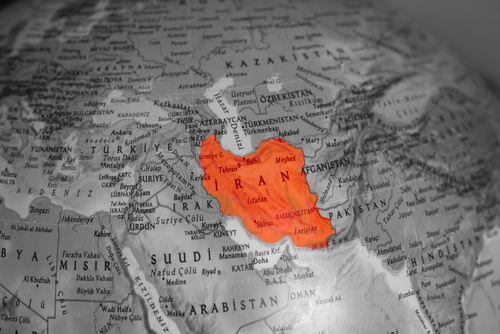
We are issuing this urgent advisory to update you on the rapidly evolving geopolitical situation in the Gulf region and its direct impact on global and regional supply chains. Recent developments have resulted in significant disruptions across maritime and air logistics networks. As a temporary measure and in line with local government instructions the majority of our teams in Iraq, Qatar, and UAE will work remotely where possible, there will be limited yard operations where necessary.
Closure of the Strait of Hormuz
The Strait of Hormuz—one of the world’s most critical energy and commercial shipping corridors—has been declared closed to vessel traffic following escalating military exchanges in the region. Multiple authoritative sources report that Iran’s Islamic Revolutionary Guard Corps (IRGC) has warned that no vessels will be permitted to pass and that shipping lines have already suspended navigation through the strait.
As a result:
- Major global carriers, including CMA CGM, Hapag-Lloyd, MSC, ONE Line and others, have suspended transits or rerouted vessels away from the Gulf.
- Feeders Vessels operating from major hubs into Gulf ports have as well suspended operations.
- Vessel traffic has dropped sharply, with tankers instructed to take shelter or reverse course.
- The disruption affects a corridor that typically handles ~20% of the world’s oil and LNG flows, posing significant risks to the
- stability of global supply chains.
- Due to heightened tensions carriers that had previously resumed transit through the Red Sea have also now re routed vessels around Cape of Good Hope.
- MSC has suspended all new bookings into Middle East Ports.
- Other carriers have already applied significant surcharges to imports and exports from Middle East with effect from 2nd March.
Operations Resumed in Jebel Ali Port
Jebel Ali Port has resumed operations after a temporary suspension of operations for precautionary reasons . All other ports in United Arab Emirates remain operational but with heightened security.
Widespread Airspace Closures Across the Middle East
Simultaneous with maritime restrictions, several Middle Eastern countries have enacted full or partial airspace closures due to regional security escalations following U.S. and Israeli military operations in Iran. Countries currently affected include Iran, Qatar, Kuwait, Bahrain, Iraq, the UAE, Israel, and Jordan.
Key impacts:
- Airlines have cancelled or diverted hundreds of flights, with more than 1,800 flights cancelled in a single day, affecting passenger and cargo movement alike.
- Gulf hub operations (Dubai, Doha, Abu Dhabi) have experienced major suspensions, severely limiting connectivity between Asia, Europe, and Africa.
- Qatar Airways, Emirates, Etihad, and other carriers have temporarily suspended operations or halted departures as authorities manage airspace safety.
- Current evidence shows that Saudi Arabia has not closed its airspace, unlike Iran, Iraq, Israel, Qatar, Bahrain, Kuwait, and parts of the UAE and Syria. Instead, Saudi Arabia is functioning as one of the only remaining open east-west aviation corridors, which has caused heavy rerouting through the kingdom’s airspace.
- Saudi Arabia’s airspace remains open, the country is currently serving as one of the only safe, operational regional air corridors. Airlines such as Saudia have suspended multiple routes for safety, but this is not due to Saudi-led airspace closure.
- Expect high congestion, rerouting delays, and significant pressure on Saudi ATC infrastructure as traffic is funnelled around closed neighbouring airspaces. This situation is expected to cause transit delays, diversions, reduced belly-cargo capacity, and interruptions in scheduled supply chain flows.
Expected Impact on Your Supply Chain
Given the dual disruption of sea and air corridors:
- Transit times for ocean freight may extend significantly due to rerouting.
- Airfreight capacity is currently restricted, with possible backlogs once operations resume.
- Logistics costs across modes are likely to rise in the short term.
Our Mitigation Measures
We are undertaking the following actions to minimize customer impact:
- Rerouting cargo via alternative maritime corridors where feasible.
- Close coordination with carriers, port authorities, and aviation regulators to obtain real-time movement updates.
Recommendations for Our Customers
We advise you to:
- Plan for extended lead times for shipments moving through the Middle East.
- Consider alternative sourcing or routing options where possible.
- Update your internal stakeholders and downstream partners regarding likely delays.
- Contact your account manager for individual shipment assessments and contingency options.
We are continuously monitoring the situation through verified governmental, security, and carrier channels and will issue updates
as soon as further clarity is available. Your operations and supply continuity remain our highest priority. If you require case-specific
guidance, mitigation planning, or emergency logistics support, please reach out to your dedicated service representative or reply
directly to this message.
Stay safe and assured of our continued support during this challenging time.
Yours truly,
Pentagon Middle East & India Management Team